

The Glassblowing Tradition of Līvāni, Latvia
- Home
- Festivals
- Lauksnos
- 2026
- Traditions
- The Glassblowing Tradition of Līvāni, Latvia
The Glassblowing Tradition of Līvāni, Latvia
The glassblowing tradition of Līvāni is one of the most significant glasscraft traditions in Latvia, closely connected with the history of the town of Līvāni and its glass industry. Glass production in Līvāni began in 1887 with the establishment of the first glass factory. Thanks to favorable economic conditions, the availability of raw materials and its advantageous geographical location, Līvāni gradually became one of the most important glass production centers in the Baltic region.
At the beginning of the 20th century the Līvāni Glass Factory was the largest in Latvia employing approximately 500 workers. During the First World War the factory was destroyed, however glass production in Līvāni was restored as early as the 1920s. After the Second World War the glass industry entered a new phase of development, when experienced glassblowers resumed work in Līvāni ensuring the continuity of craft skills and preserving the traditions of glassmaking.
The most rapid growth of the Līvāni Glass Factory occurred during the 1960s–1980s. During this period production was modernized, the manufacture of colored glass and clear crystal products was introduced and dozens of highly skilled glassblowers were employed at the factory. Works created through the collaboration of artists and master craftsmen became an important part of Latvian design and applied arts. Līvāni glass products were exported to many countries increasing the international recognition of both the factory and the town.
After the company ceased operating in 2008, significant threats emerged to the preservation of the glassblowing tradition. The collection of the Līvāni Glass Museum, currently the largest glass collection in the Baltic States, found its home in the Livani Glass and Craft center thanks to the support of the Līvāni Municipality. In 2016 a fully equipped glassblowing workshop was established at the Livani Glass and Craft center, where hot-glass production and the glassblowing process were successfully revived.
Today the glassblowing workshop of the Livani Glass and Craft center is the only publicly accessible hot-glass workshop in Latvia. The workshop is staffed by glassblowers Aleksandrs Logvins and Ivars Āboltiņš, who carry forward the skills and traditions of the Līvāni glassblowing craft and ensure their transmission to future generations. The workshop produces both traditional glass vessels and decorative objects, as well as contemporary design pieces demonstrating the ability of the glassblowing tradition to evolve alongside modern cultural and design processes.
Glassblower Aleksandrs Logvins has refined his craft for more than forty years and is one of the most experienced glassblowers in the Baltic region. He has also mastered complex Venetian glassmaking techniques such as murrini, reticello and filigree which require exceptional precision and craftsmanship. Meanwhile Ivars Āboltiņš represents the new generation of glassblowers ensuring the continuity of professional knowledge and the sustainability of the tradition for the future.
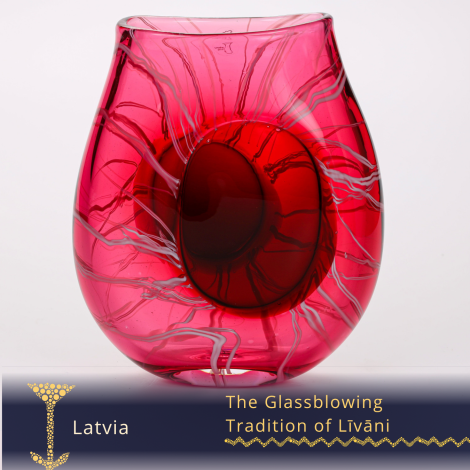
The works exhibited here were created in the glassblowing workshop of the Livani Glass and Crafts center using the free-blown glassmaking technique. In this process the shape of the glass is not formed using a pre-made mold, but emerges directly in the hands of the master craftsman through an immediate dialogue with the molten material. Each object is unique and irreplaceable, as glass constantly changes, flows and demands instant decisions. It is precisely this unpredictability that gives the craft of glassblowing its special charm and makes every piece a singular testimony to a specific moment in time.
These glassworks reflect both historical heritage and the professional experience and creative explorations of contemporary glass masters. They demonstrate the diverse possibilities of glass as a material while maintaining a close connection to the glassmaking traditions that have been cultivated in Līvāni for more than a century.
In 2020 the craft skill of Līvāni glassblowers were included in the Latvian List of Intangible Cultural Heritage Values confirming their significance within Latvia’s cultural and historical heritage. Today the glassblowing tradition of Līvāni is not only a historical legacy, but also a living and evolving cultural value that continues to shape the identity of Līvāni and preserve Latvia’s traditions of glass art and craftsmanship for future generations.
This exhibition invites visitors to discover Latvia’s glass heritage through the story of Līvāni—a story of a tradition that despite the changes of time remains alive, delicate and at the same time remarkably strong.
Līvāni – the town where glass is still alive!

 Daržų st. 10, LT-91246, Klaipėda


